 Channel July 36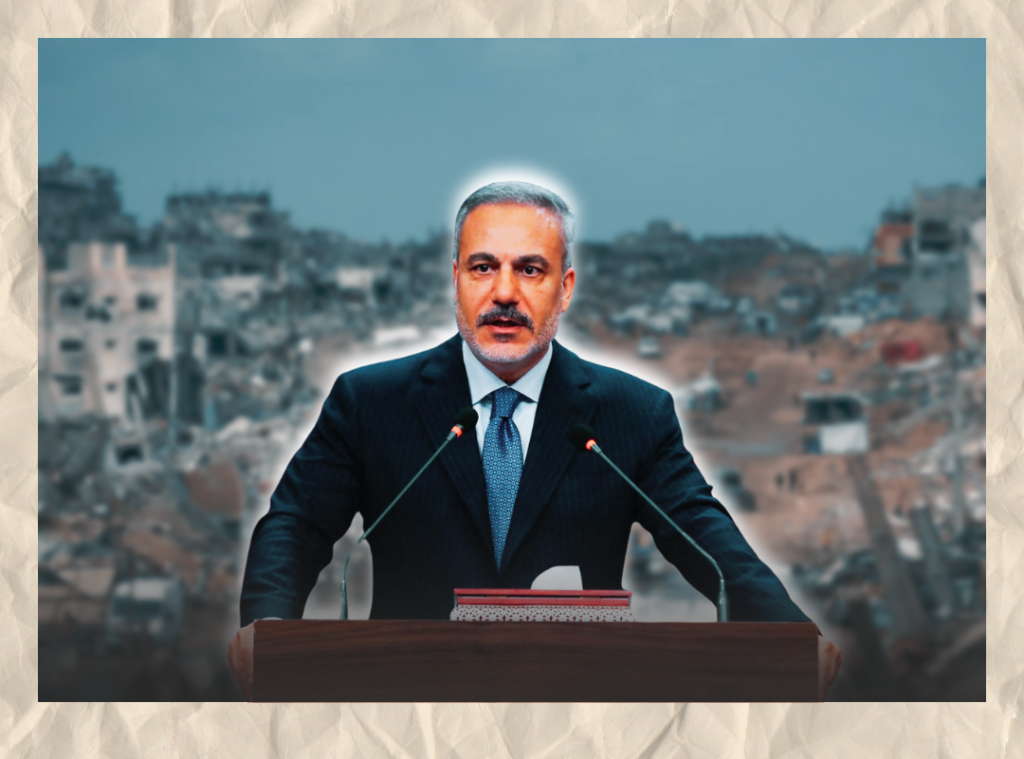
In a candid live interview on Turkish broadcaster A Haber on November 16, 2025, Foreign Minister Hakan Fidan declared Turkey’s unwavering preparedness to play a pivotal role in stabilizing the Gaza Strip, potentially including the deployment of troops if required. “Turkey is ready to shoulder the burden in Gaza and will fulfill all necessary responsibilities
In a candid live interview on Turkish broadcaster A Haber on November 16, 2025, Foreign Minister Hakan Fidan declared Turkey’s unwavering preparedness to play a pivotal role in stabilizing the Gaza Strip, potentially including the deployment of troops if required. “Turkey is ready to shoulder the burden in Gaza and will fulfill all necessary responsibilities with a profound sense of duty, including sending troops. This is our clearest message to the international community,” Fidan emphasized, underscoring Ankara’s proactive stance in the region’s volatile peace process. The remarks come amid intensifying diplomatic maneuvers tied to U.S. President Donald Trump’s ambitious 20-point Gaza peace plan, which envisions a phased Israeli withdrawal, Hamas disarmament, and the establishment of an International Stabilization Force to oversee security and reconstruction following two years of devastating conflict. Fidan highlighted a pivotal September meeting between Turkish President Recep Tayyip Erdogan and Trump, where regional security hotspots—including Syria, Ukraine, and the Palestinian territories—took center stage. “Those discussions reinforced Turkey’s reliability as a key partner in global stability,” he noted, pointing to ongoing consultations with Washington on the force’s operational framework and legal mandate. A draft UN Security Council resolution, circulated by the U.S., is currently under heated debate, outlining a two-year transitional authority and authorizing the multinational force to employ “all necessary measures” for demilitarization. While Turkey insists on a strictly peacekeeping-oriented mission to avoid clashes with militants or Israeli forces, Fidan revealed that potential contributors like Indonesia and Pakistan are training thousands of troops—Indonesia alone has prepared 20,000 personnel for health and reconstruction roles—contingent on the resolution’s final language. “Countries will decide on deployments based on the UN’s definition to ensure legitimacy,” he added, echoing concerns from Arab partners wary of being perceived as occupiers. Fidan also addressed the fragile ceasefire brokered in October, crediting a U.S.-led Civil-Military Coordination Center (CMCC), launched on October 12 under the U.S. Central Command in Israel, for monitoring compliance and easing aid blockages. “The U.S. has created mechanisms to remove obstacles, which is crucial for making the truce effective,” he said, praising Washington’s ownership while noting persistent Israeli violations that have claimed over 250 Palestinian lives since the halt in hostilities. Turkey, alongside Egypt and Qatar, has been instrumental in these mediation efforts, providing political backing despite not being formal guarantors. The announcement has drawn sharp reactions: Israel has vehemently opposed Turkish involvement, with Prime Minister Benjamin Netanyahu labeling it “unacceptable” due to Ankara’s vocal criticism of Israel’s actions as “genocidal.” U.S. Secretary of State Marco Rubio’s recent meeting with Fidan in Washington signaled close coordination, yet tensions simmer as Trump navigates balancing Israeli security concerns with broader Arab buy-in. Human rights advocates and analysts warn that without swift UN approval, the plan risks unraveling, potentially partitioning Gaza de facto and sidelining the Palestinian Authority. As Fidan put it, “Sustainable peace demands ending the occupation and empowering Palestinian self-governance”—a call that resonates amid Gaza’s humanitarian crisis, where millions remain trapped in rubble-strewn displacement camps.














Leave a Comment
Your email address will not be published. Required fields are marked with *