 Channel July 36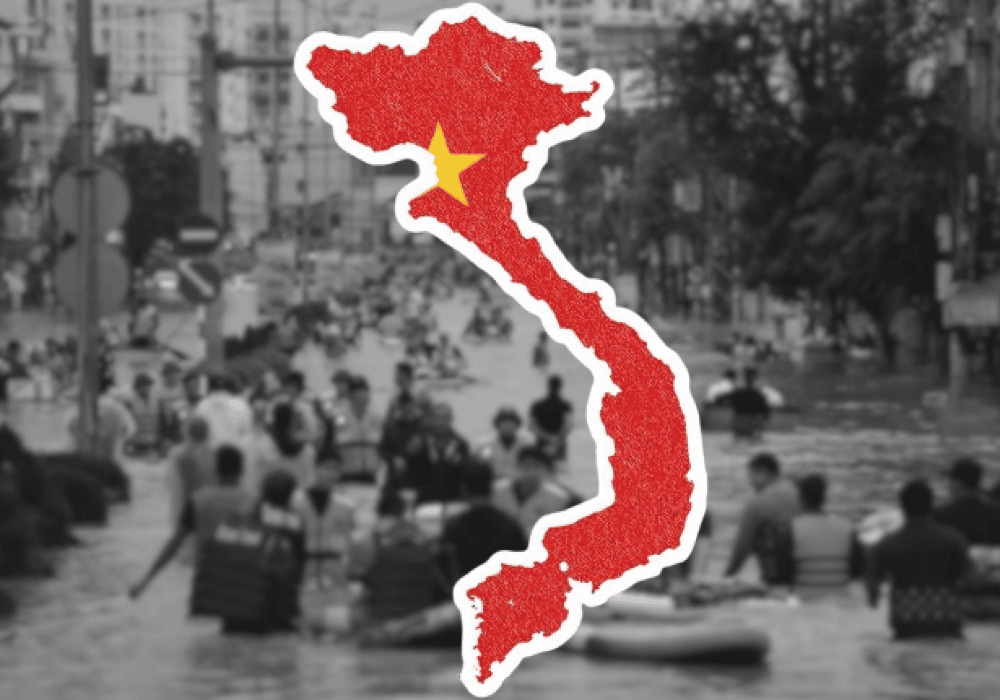
Vietnam’s central and southern regions are reeling from one of the worst natural disasters in decades, with the death toll from severe flooding and landslides reaching 90 and 12 people still missing, according to the Ministry of Natural Resources and Environment on Sunday, November 23, 2025. Relentless rains since late October—exceeding 1.9 meters (74.8 inches)
Vietnam’s central and southern regions are reeling from one of the worst natural disasters in decades, with the death toll from severe flooding and landslides reaching 90 and 12 people still missing, according to the Ministry of Natural Resources and Environment on Sunday, November 23, 2025. Relentless rains since late October—exceeding 1.9 meters (74.8 inches) in some areas, with peaks of 5.2 meters unseen since 1993—have triggered widespread devastation, submerging entire neighborhoods, burying villages under mudslides, and disrupting critical infrastructure across five provinces.
The mountainous province of Dak Lak has suffered the heaviest toll, recording over 60 deaths since November 16, with tens of thousands of homes flooded and entire communities, like that of 61-year-old farmer Mach Van Si, completely buried under mud. Si recounted his harrowing escape: “Our neighborhood was completely destroyed. Nothing was left. Everything was covered in mud… I just thought we were going to die because there was no way out.” Other hard-hit areas include Quang Ngai, Gia Lai, Khanh Hoa, and Lam Dong, where rivers overflowed embankments, turning roads into rivers and isolating remote villages. Over 186,000 households have been damaged, more than 3 million livestock drowned, and economic losses are estimated at $343 million (£270 million) across affected regions, exacerbating the $2 billion in damages from 279 disaster-related deaths nationwide this year.
As of Sunday morning, approximately 258,000 people remained without power, major highways and railway sections were blocked by debris and floodwaters, and rescue operations continued with helicopters air-dropping supplies like food, water purification tablets, and clothing to isolated areas. Tens of thousands of soldiers, police, and volunteers have been mobilized for evacuations, with boats and ladders used to reach stranded residents on rooftops in cities like Quy Nhon and Nha Trang, where hospitals relied on instant noodles for days. Prime Minister Pham Minh Chinh, from South Africa, convened an emergency virtual meeting and allocated 500 billion Vietnamese dong ($19 million) to Dak Lak for rebuilding homes and infrastructure.
This catastrophe, intensified by Typhoon Kalmaegi earlier in November, underscores Vietnam’s growing vulnerability to extreme weather, driven by human-induced climate change, which scientists say is making Southeast Asian storms more frequent and destructive. With nearly half the population in high-risk flood zones, the nation faces mounting challenges to its coffee belt economy, tourism hubs like Da Lat and Hoi An, and vital transport networks, prompting urgent calls for enhanced resilience measures. Rescue efforts persist as waters recede, but experts warn of prolonged recovery amid forecasts of continued instability.
















Leave a Comment
Your email address will not be published. Required fields are marked with *